

U of Digital Newsletter: July 23, 2025 (Free Edition)
Outline
U of Digital Newsletter - 7/23/25 (free)

Shiv Gupta
July 23, 2025

July 16th-July 22nd
Below is a roundup of last week’s notable industry news, with summaries and our opinions. Everything is an ad network…

Due to popular demand, U of Digital’s AI ACCELERATOR is coming back for round 2 in August! Space is running out. Use EarlyBirdsAreSmart promo code for 20% off (promotion expires Friday).
Email [email protected] for team discounts. ENROLL NOW!

Q2 Earnings!
Netflix (🤷): Revenue was up 16% to $11.08B, beating estimates. The streamer attributed growth to increased memberships, subscription pricing, and ad revenue. Netflix raised its full-year guidance and expects to double ad revenue in 2025. Users watched 95B hours on the platform in H1. Netflix warned of smaller margins due in part to marketing upcoming releases. Shares dipped 1%.
Publicis (🤷): Organic net revenue growth was up 5.9%, beating estimates. H1 organic growth was 5.4%. The French agency holding company attributed performance to recent account wins like Mars and Lego. Publicis raised full-year guidance for organic growth to close to 5%, up from 4-5%. Despite the positive report, something spooked investors, sending shares lower.
IPG (👍): Organic net revenue was down 3.5%, beating estimates. The agency holding company has shrunk by 6% as it prepares for its merger with Omnicom, scheduled for completion this year. IPG touted the launch of its new agentic platform, ASC (agentic systems for commerce) aimed at CPG brands. IPG reaffirmed its full-year guidance of a 1%-2% decline in organic net revenue. Shares rose 4%.
Opinion: The tariff wars are still negatively impacting consumer and advertising spending. We’ll get a better idea about how they are affecting marketer spend in the coming weeks as more digital advertising platforms and media companies release their earnings reports. Q2 earnings seem a bit better than we expected so far, but it’s still early.

Other Notable Headlines
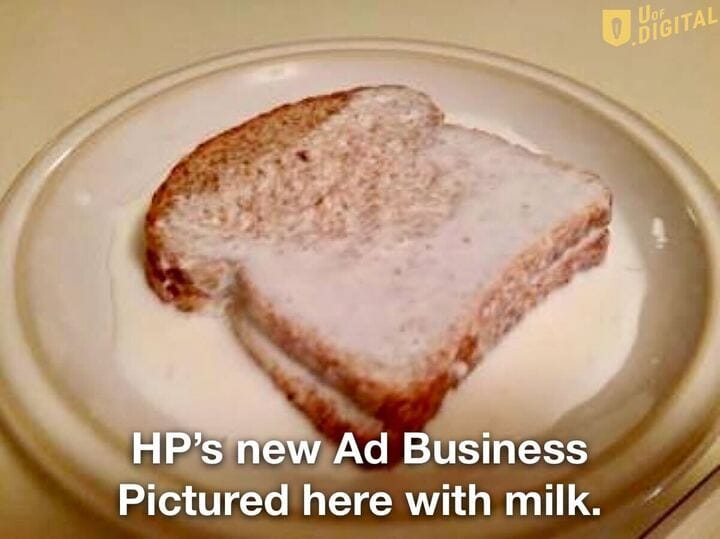
HP Is Launching an Ad Business With Laptop-Targeted Ads and a Streaming Service - The tech manufacturer is pitching advertisers on its HP Media Network, which leverages data from 160 million US users across 19 million devices to serve targeted ads directly on HP computers and apps. The company will use its first-party data to sell on-device ads such as a corner format called "Toast," which generated 5M views for HP when it tested the ads for holiday promotions of its products. HP will also sell offsite ads through partners such as Microsoft and Kargo. HP is also getting into the streaming game with a free ad-supported streaming service (FAST) featuring on-demand content with ad formats including in-stream, pause, and carousel ads. This move underscores how device manufacturers are increasingly competing for ad dollars, similar to smart TV makers like Samsung and LG, which have successfully monetized their own hardware through advertising platforms. Additionally, HP's timing comes as the PC manufacturer faces increased competition from Apple, which is eating into HP's 20% market share with its 14% year-over-year growth.
Opinion: As they say, everything is an ad network. With Apple gaining ground, HP needs new revenue streams beyond hardware sales, so timing of this launch makes sense from a survival perspective. Is it just us, or does an HP FAST channel sound boring AF?
Substack Raises $100 Million, Betting on Subscriptions but Coming Around to Ads - The newsletter platform secured funding from investors like the Chernin Group, BOND, Rich Paul's Klutch Sports Group, and Andreessen Horowitz, valuing the company at $1.1B—a nearly 70% jump from its 2021 valuation of $650M. Despite co-founder Hamish McKenzie’s previous criticism of social media's "narrative frenzy" and calling the ad model "busted," the company is now embracing advertising in its next phase of growth because its creators want to be able to generate revenue from native advertising. Currently, Substack's revenue model takes a 10% cut from creator subscriptions, which has generated over 5M paid subscriptions from writers like George Saunders and Heather Cox Richardson, but now Substack is positioning itself more as a YouTube competitor (influencer content) than a MailChimp rival (email platform). Substack's evolution towards influencer content reflects the app's maturation to include features such as chat capabilities, live video conversations, and Notes. And of course, ads.
Opinion: Yup, everything is an ad network. Substack’s biggest writers are already monetizing through brand partnerships and sponsored content outside the platform. By bringing ads in-house, Substack isn't just taking a cut of subscription revenue anymore; they're positioning to take a piece of every creator's total income stream. It's smart, and it turns every newsletter writer into a media company with Substack as the back-office infrastructure.

OpenAI to take cut of ChatGPT shopping sales in hunt for revenues - The move represents a business model evolution for the money-losing AI company, which has primarily relied on subscriptions for revenue and is now exploring new ways to monetize its massive free user base. Following a partnership with Shopify in April, the two companies have begun presenting early versions of a new integrated shopping experience to brands and discussing financial terms, though the feature remains in development and could change. Free users currently see product recommendations with click-through links to retailers, but OpenAI will reportedly add a checkout system to ChatGPT and take a small affiliate fee on transactions that take place within the platform. OpenAI's ecommerce push poses another threat to Google's search-driven advertising model as consumers increasingly embrace AI chatbots for product discovery. The move follows earlier statements against advertising from OpenAI, but as we've saw with Substack (and Netflix), companies always change their tune when they need new revenue streams.
Opinion: Say it one more time: everything is an ad network. OpenAI will inevitably become an ad company. This partnership with Shopify is its first real move into advertising, as an affiliate. We already know OpenAI is eating into Google’s search market share. But the big revelation here is OpenAI’s attempt to become a transaction platform and usher the consumer through their entire shopping journey, from discovery to purchase. And potentially start eating into Amazon’s retail and advertising market share. Transaction data would give OpenAI tons more training data to improve their models (especially for personalized shopping!) and give them the ability to provide advertisers with closed loop measurement. Watch out Amazon!
PubMatic Launches AI Sports Ad Marketplace for Live Streaming - The supply-side platform's new Live Sports Marketplace uses AI to scan live game and viewership data to identify high-engagement moments like critical NFL plays to serve ads when viewer attention is at its highest. The system will tap into DirecTV, Spectrum Reach, Roku, FuboTV, and other CTV publishers to let advertisers buy in real time specific games, teams, or moments while reducing wasted spend during slow periods. The ad inventory available will span major pro leagues and specialized sports programming. For example, launch partner FanServ provides premium inventory across major leagues like NBA, WNBA, MLB, and NHL, while the Live Sports Marketplace will also offer inventory for sports like pickleball, tennis, and golf. The move comes as live sports continues to draw massive viewership and ad dollars. In 2025, 114.1M Americans are expected to watch live sports digitally, according to eMarketer, up from 105M in 2024, outpacing the 82M who watched live sports on linear TV.
Opinion: The technical execution here will be crucial. Sports happen fast, and if there's latency between moment identification and ad serving, advertisers could end up buying inventory for plays that are already over. The system needs to be predictive, not just reactive.
Criteo and Mirakl Team up to Make It Easier for Small, Third-Party Sellers to Buy Retail Media Ads - A new backend integration enables small marketplace sellers to purchase self-service ads across Criteo’s network of retailers. This collaboration illustrates the next phase of commerce media growth, where retail networks that initially catered to major advertisers are now expanding their marketplaces to smaller, third-party sellers for ad dollars, who are more likely to be running their own campaigns and need automation and AI-powered optimization tools. The partnership creates a big footprint too, combining Criteo's reach across more than 220 commerce media networks with Mirakl's technology, which powers more than 450 online marketplaces hosting 100K-plus sellers. While both companies declined to name pilot retailers, their combined client base includes major players like Best Buy, Macy's, Albertsons, Kroger, and Walmart Canada.
Opinion: This is a smart move: Smaller brands have long been the bread and butter for platforms like Google and Meta. Retail media is a no-brainer performance play for smaller brands, maybe even more so than Google and Meta. Small brands lack the resources for sophisticated ad campaign management and sales, so the ability to deliver results with minimal human intervention will determine the partnership’s viability.
The Trade Desk Stock Soars on Inclusion in S&P 500. History Says This Will Happen Next. - The Trade Desk joined the S&P 500 Index last week, replacing Ansys after it was acquired by Synopsys. Its shares jumped over 7% immediately, and they could grow even more if shares follow the typical upward trajectory of companies newly added to the index. The Trade Desk's addition comes after a remarkable seven-year run with 760% in gains, reflecting its position as the largest independent demand-side platform (DSP). Frost & Sullivan recently ranked the company first among DSPs for growth and innovation, noting its AI-powered tools for campaign optimization and its positioning as an agnostic player. Wall Street projects 12% annual earnings growth for The Trade Desk through 2026.
Opinion: It's cool to see an ad tech OG like The Trade Desk represent the industry on the S&P 500 Index. But with this kind of inclusion comes even more pressure to deliver. It’s hard to maintain the kind of growth that got the company here, and it’s still navigating a slower-than-expected rollout of its Kokai buying platform, among other headwinds. The DSP market feels like it’s on the cusp of commoditzation with the rise of AI, and with the Amazon DSP trying to gobble up market share by undercutting everyone on price. Good luck, TTD!

Paid Subscribers See ALL The Digital Advertising News.
Thank you for reading the U of Digital Newsletter.
Continue reading by upgrading.
That’s It For This Week 👋
The U of Digital Weekly Newsletter is intended for subscribers, but occasional forwarding is okay!
To subscribe visit Uof.Digital/Newsletters or contact us directly for group subscriptions.
And remember, U of Digital helps teams drive better outcomes through structured education on critical topics like programmatic, privacy / identity, CTV, commerce media, AI, and more. Interested in learning more about how we can supercharge your team?
Thanks for reading!