

U of Digital Newsletter: September 24, 2025 (Free Edition)
Outline
U of Digital Newsletter - 9/24/25 (free)

Shiv Gupta
September 24, 2025

September 17th-September 23rd // Estimated Reading Time: 10 minutes
Below is a roundup of last week’s notable industry news, with summaries and our opinions. Say hello to your new browsing agent…


U of Digital’s AI Accelerator is THE go-to course for marketing and advertising professionals looking to get a head start on AI.
And now the industry’s leading AI DSP, Yahoo DSP, is the exclusive sponsor of the AI Accelerator!
The next Accelerator launches on October 14th. Use promo code YahooForAI for 20% off individual tickets. Email [email protected] for team discounts. TICKETS ARE SELLING FAST, ENROLL NOW!
#KnowledgeIsPower #HumansAheadOfAI
Top Stories 👁️
Google brings Gemini in Chrome to US users, unveils agentic browsing capabilities, and more
Source: Aisha Malik, TechCrunch
September 18th, 2025
Summary: Google is giving all US Chrome users access to its Gemini AI assistant—no subscription required. Previously, you had to pay for Google AI Pro or Ultra to get Gemini in your browser. Not anymore!

Soon, you will be able to ask Gemini to explain confusing website content, compare info across multiple browser tabs, or help organize your online shopping and travel planning. Google is also more deeply connecting Gemini to other Google apps like Calendar, YouTube, and Maps so you can schedule meetings or find specific video moments without switching tabs. Google is also putting its “AI Mode” search right in Chrome's address bar, so you can ask complex questions instead of just typing keywords.
This move puts Google head-to-head with Perplexity’s Comet and OpenAI's Operator, agentic browsers which launched earlier this year.
Opinion: Perplexity launching Comet was … cute. But Gemini being baked directly into Chrome means that agentic browsing is about to go mainstream. Google's distribution advantage through the world's dominant browser (Chrome) means we're not talking about a niche AI tool anymore, but a fundamental shift in how billions of people interact with the web. And the marketing and advertising implications of that are massive.
When agents handle routine tasks like booking appointments or comparing products, users will spend less time on publisher sites where most ad inventory lives. Less browsing time means less advertiser demand and less ad supply. Publishers and open web ad tech will get hit hard.
The shift will also turbocharge upper-funnel investment. Entertainment ecosystems, like social platforms, streaming television, streaming audio, gaming, etc., become even more valuable as they capture the user attention that's being siphoned away from traditional web browsing.
With fewer opportunities to catch consumers in active consideration or purchase moments, brands will spend less on the lower funnel, and will need to work harder building awareness and preference before the agent even gets involved in the decision-making process. And for the lower funnel, expect to see the explosion of AI Optimization (AIO) and Generative Engine Optimization (GEO) as marketers scramble to figure out how to influence what agents recommend and buy.
Eventually, when AI companies have to start actually making money, they will become advertising companies too, and start to replenish ad supply. But that will take some time, as they build up their consumer bases with the backing of hundreds of billions in VC money. In the meantime, it feels like we’re about to enter into a digital advertising ice age…


Other Notable Headlines
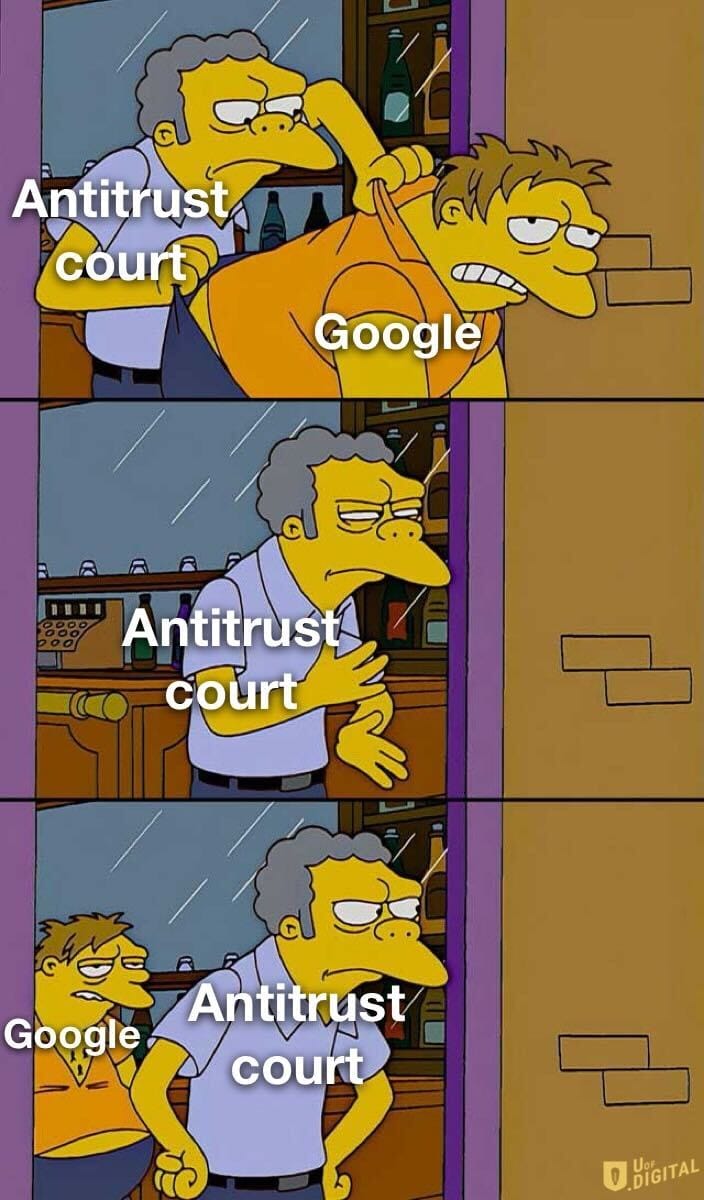
DOJ v. Google: During Opening Arguments, The DOJ And Google Battle Over An AdX Divestiture - Google’s in antitrust court, again. The US Department of Justice (DOJ) and Google kicked off the final stage of their ad tech antitrust trial to hash out how to correct Google's illegal ad tech monopoly, with vastly different visions for the future. Remember, Judge Brinkema already found Google guilty of being an ad tech monopoly in the publisher ad serving and ad exchange sectors earlier this year. Google proposes narrow behavioral changes limited to open web display inventory—like removing auction advantages and Unified Pricing (rules that prevented publishers from setting their own pricing floors). But the DOJ wants Google to break off its ad exchange AdX and argues that any remedy "must deal with AdWords," since Google was able to leverage AdWords demand to coerce publishers to use its ad server. Google's legal team characterized the DOJ's approach as a "swing for the fences," warning that divestiture would be technically unfeasible and create major headaches for publishers and advertisers. The case is being heard in Virginia's "rocket docket" court, with Google promising its behavioral fixes could be implemented within a year versus the DOJ's 14-year timeline. Depending on the outcome, the advertising world could change in a major way by October 1st!
Inside Trump's deal to save TikTok - Chinese owner ByteDance will make a copy of TikTok's algorithm, which will be leased to the new US joint venture that will operate TikTok in America. Under terms of a deal between China and the US, Oracle will use US user data to retrain the algorithm and ensure data security. A lease, rather than a sale, will let ByteDance operate TikTok in other countries. The joint venture will be controlled by a US investor group led by Andreessen Horowitz, Silver Lake, and Oracle; President Trump also said the investment group could include Michael Dell and Rupert Murdoch.
Netflix Strikes Global Marketing Deal With Beverage Giant AB Inbev - The partnership will make brands like Budweiser, Stella Artois, and Corona sponsors of Netflix shows and live events around the world. The deal takes advantage of Netflix's ad-supported tier in a dozen countries to create joint marketing campaigns for live events like boxing matches, NFL Christmas games, and the upcoming Women's World Cup. AB InBev's marketing chief Marcel Marcondes lauded the partnership's breadth, which makes it possible for the companies to partner on a global scale while customizing efforts by market. The collaboration will include show sponsorships, brand integrations, special packaging, and potentially custom products. Big deal for Netflix Ads.
Hearst puts its audience data to work — through Amazon - Hearst Magazines is testing a new partnership with Amazon that integrates its AURA audience targeting tool with Amazon's data clean room to improve ad performance for advertisers buying through the Amazon DSP. The partnership allows advertisers to access Hearst's audience segments, which are built by combining browsing behavioral signals with contextual information from consumers’ content consumption on Hearst properties. The integration surfaces valuable overlaps between Hearst audiences and Amazon shopper behavior, like matching Hearst's "globetrotter" audiences with Amazon's travel book browsers. Early results show "noticeably stronger completion and click-through rates" when advertisers use the Amazon DSP to buy Hearst inventory.
Amazon introduces AI agent to help sellers with tedious tasks - The AI agent, added to Amazon's Seller Assistant for third-party merchants, can fix account issues or coordinate inventory orders and business growth plans with little to no supervision. Amazon has already introduced AI-powered video, image, and product listing generators for third-party merchants, who sell more than half of the products in its marketplace. The company says 1.3M sellers have used its generative AI listing tools, and more agentic capabilities are on the way in response to seller feedback. The company doesn't plan to charge for Seller Assistant, instead generating revenue from sellers who pay for fulfillment, account management, and other services that brought in $40.3B in Q2.
Microsoft looks to build AI marketplace for publishers - Microsoft is discussing a Publisher Content Marketplace with publishers, which would make Microsoft the first major AI tech company to create a system that compensates content creators on a per-use basis rather than upfront licensing deals. Copilot would serve as the initial AI buyer in the marketplace, with Microsoft hoping to expand to more partners and AI products over time. The initiative could provide a template for the industry, as smaller startups like TollBit and ProRata.ai have attempted similar marketplaces but lack the scale to meaningfully compensate publishers suffering traffic losses due to AI-powered search. Copilot’s traffic is small compared to Gemini or OpenAI, but Microsoft does have enterprise scale through Office 365 and Azure.
Kroger Precision Marketing launches off-site programmatic advertising capabilities - Kroger's commerce media arm now offers managed services to extend campaigns off-site on streaming audio, connected TV, and display inventory. Kroger Precision Marketing will run these campaigns for brands that don't have the resources to manage complex digital advertising campaigns themselves, especially mid-sized food and consumer brands. Kroger would then provide detailed sales reporting that shows how those ads led to actual purchases on Kroger.
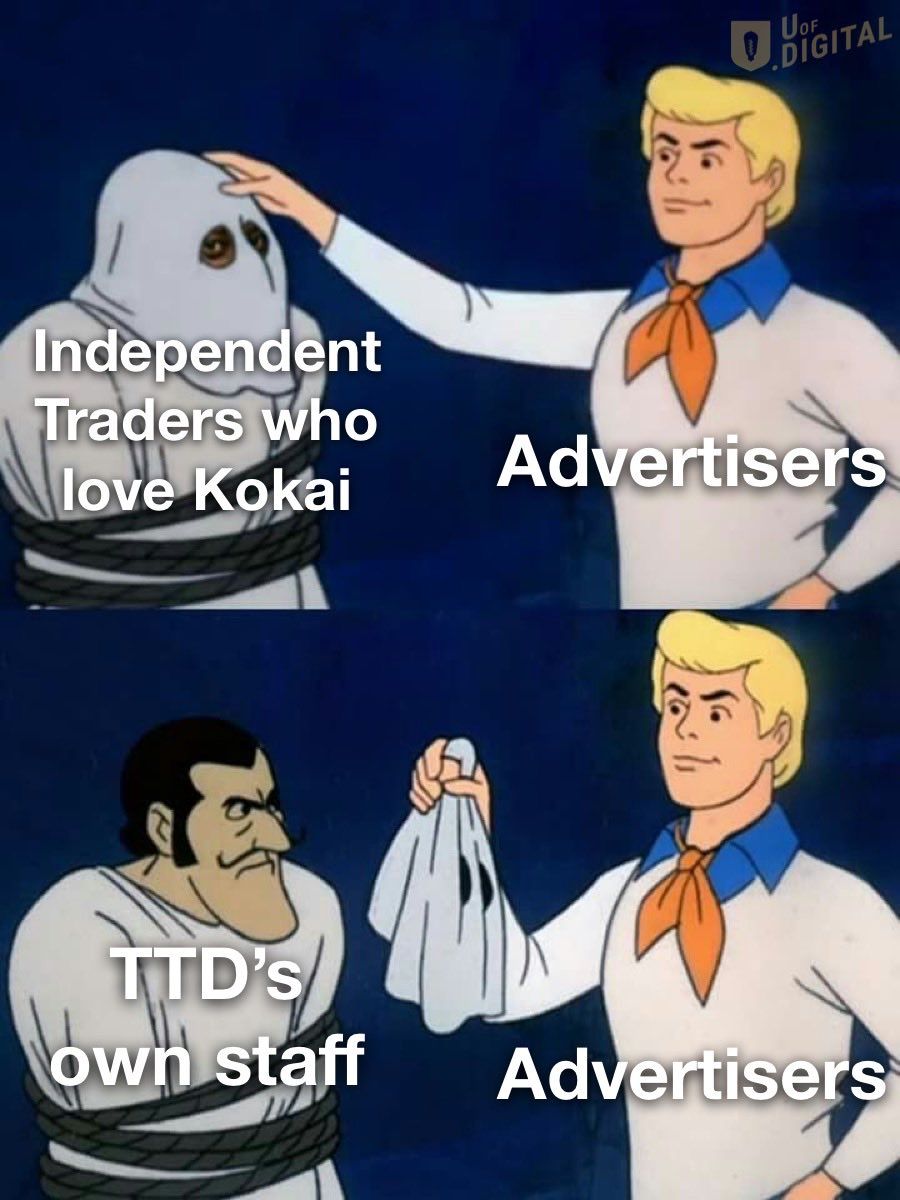
The Trade Desk Partially Sunsets Controversial Kokai Feature in Latest Redesign - The Trade Desk is rolling out a major redesign of its Kokai platform that partially removes the controversial periodic table interface after months of buyer complaints that it complicated routine tasks. The color-coded visualization, which has been Kokai's signature feature since 2023, will be eliminated from advertiser and campaign views but retained at the ad group level. The company acknowledged buyer frustration in an email to clients, stating the table "could be overwhelming and difficult to navigate." In a funny, related story, a leaked presentation from TTD included "trader" testimonials praising the redesign, but the endorsements were actually from The Trade Desk's employees.
Other Notable Headlines
(that you should know about too) 🤓
Verve Group Tests Its Wings With Captify Search Intent Data For Ad Targeting - The $30M acquisition gives Verve cleaner targeting data for its privacy-focused ad platform.
The Trade Desk and Acxiom Deepen Their UID2 Collaboration With An AI-Powered Measurement Solution - The companies launched True Intelligence, an AI-powered measurement solution that connects digital and CTV campaigns to real-world sales using TTD’s UID2 and live feedback loops.
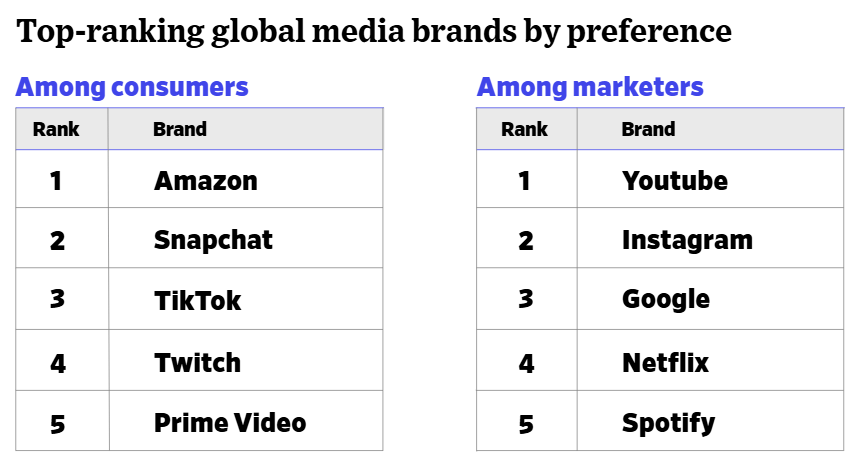
Marketers and consumers don’t prefer the same ad platforms—what it means for ad buyers - Consumers prefer to see ads on Amazon, Snapchat, TikTok, Twitch, and Prime Video. Unfortunately, marketers prefer to advertise on YouTube, Instagram, Google, Netflix, and Spotify.
source: AdAge
Retailers and Automakers Will Slash the Most Digital Ad Spend This Year, and Tariffs Are to Blame - EMarketer revised its US digital ad spend forecast down to 9.5% growth due to tariff-driven cuts by retailers and automakers, with automotive ad spend growth dropping from 11.1% to just 2.2%.
How Encryption Keys Could Resolve The TID Furor - Prebid.org recently began disabling transaction IDs in ad auctions, which hurts advertisers' ability to detect duplicate bid requests. A solution from publisher ad network Raptive could help.
Amazon grants marketing cloud access to any sponsored ad campaigns - The move allows all businesses running sponsored ads through Amazon's platform to use its data clean room to match their data with Amazon's shopping insights.
Publicis Media Big Winner In First Half New Business - The French agency holding company significantly outpaced competitors with $6.34B in new net billings, including major victories like Coca-Cola's $835M North America account.
Procter & Gamble, Bayer scrutinize ad tech as brands demand accountability and lower costs - In a tale as old as time, brands are launching reviews of their ad tech relationships as buy- and sell-side players each take about 15% of overall digital media costs.
That’s It For This Week 👋
The U of Digital Weekly Newsletter is intended for subscribers, but occasional forwarding is okay!
To subscribe visit Uof.Digital/Newsletters or contact us directly for group subscriptions.
And remember, U of Digital helps teams drive better outcomes through structured education on critical topics like programmatic, privacy / identity, CTV, commerce media, AI, and more. Interested in learning more about how we can supercharge your team?
Thanks for reading!